
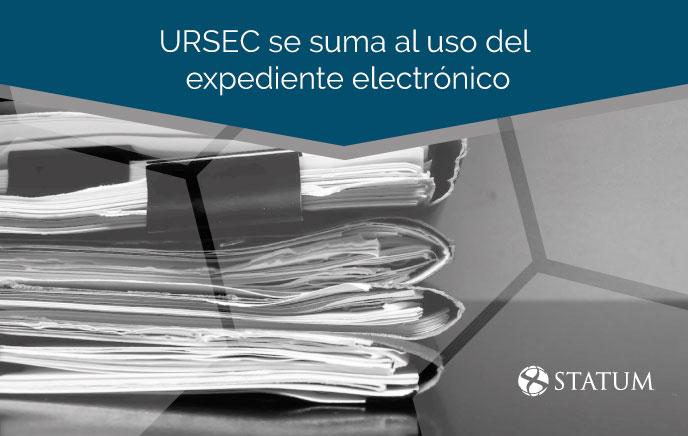
URSEC se suma al uso del expediente electrónico
Resumen:
Desde setiembre de 2015, la Unidad Reguladora de Servicios de Comunicaciones (URSEC) dejó de emplear el expediente tradicional de papel. A partir de octubre, todas las documentaciones y expedientes del organismo pasaron a ser de formato electrónico.
Información:
En los meses previos a las fechas mencionadas, la URSEC se había sumado al proyecto de implantación del expediente electrónico que fue ofrecido por la Agencia de Gobierno Electrónico y Sociedad de la Información y del Conocimiento (AGESIC). En el presente proyecto, se realizó un arduo trabajo durante todo este tiempo para adecuar la herramienta electrónica a las necesidades de la institución, a la capacitación del personal y finalmente, a la obtención de una firma digital.
En la práctica, el expediente electrónico contribuye a mejorar la calidad del trabajo, facilitando la distribución y ubicación de los expedientes por criterios ordenados de búsqueda. Así, se confiere de mayor transparencia a la gestión en particular y a la ciudadanía en general, ofreciendo su integración con posibles organismos que lo implementen a futuro.
El expediente electrónico permite también disminuir los costos asociados al papel, optimizar los espacios de almacenamiento, acelerar los tiempos de tramitación y de traslado. Además, contribuye a mejorar la seguridad de la información, otorgando el control total de acceso a los datos, confidencialidad, exámenes sistemáticos y mecanismos de respaldo, descartando por completo el riesgo de extravío y el deterioro de expedientes.
Fuente URSEC.gub.uy
Desde setiembre de 2015, la Unidad Reguladora de Servicios de Comunicaciones (URSEC) dejó de emplear el expediente tradicional de papel. A partir de octubre, todas las documentaciones y expedientes del organismo pasaron a ser de formato electrónico.
Información:
En los meses previos a las fechas mencionadas, la URSEC se había sumado al proyecto de implantación del expediente electrónico que fue ofrecido por la Agencia de Gobierno Electrónico y Sociedad de la Información y del Conocimiento (AGESIC). En el presente proyecto, se realizó un arduo trabajo durante todo este tiempo para adecuar la herramienta electrónica a las necesidades de la institución, a la capacitación del personal y finalmente, a la obtención de una firma digital.
En la práctica, el expediente electrónico contribuye a mejorar la calidad del trabajo, facilitando la distribución y ubicación de los expedientes por criterios ordenados de búsqueda. Así, se confiere de mayor transparencia a la gestión en particular y a la ciudadanía en general, ofreciendo su integración con posibles organismos que lo implementen a futuro.
El expediente electrónico permite también disminuir los costos asociados al papel, optimizar los espacios de almacenamiento, acelerar los tiempos de tramitación y de traslado. Además, contribuye a mejorar la seguridad de la información, otorgando el control total de acceso a los datos, confidencialidad, exámenes sistemáticos y mecanismos de respaldo, descartando por completo el riesgo de extravío y el deterioro de expedientes.
Fuente URSEC.gub.uy


Comentarios (0)
Deja un comentario